Local
Area man has no idea where his coffee comes from
“Somewhere in the south,” he told reporters, between sips.
Advertisement
Concept,
Animated web ads for Puku Puku, microlot coffee from Peru
The problem
Vague origins. Faceless plantations. Traceability that ends at the country name, if you’re lucky.
Puku Puku sells microlot coffee: every bag traces back to one farm, one plot and one farmer. That’s rare, it’s personal, and it’s a much better story than a mountain silhouette and the word “artisanal.”
So the ads skip the rhetoric and just show their work.
The trace
5,000 mifrom the shelf to the farm
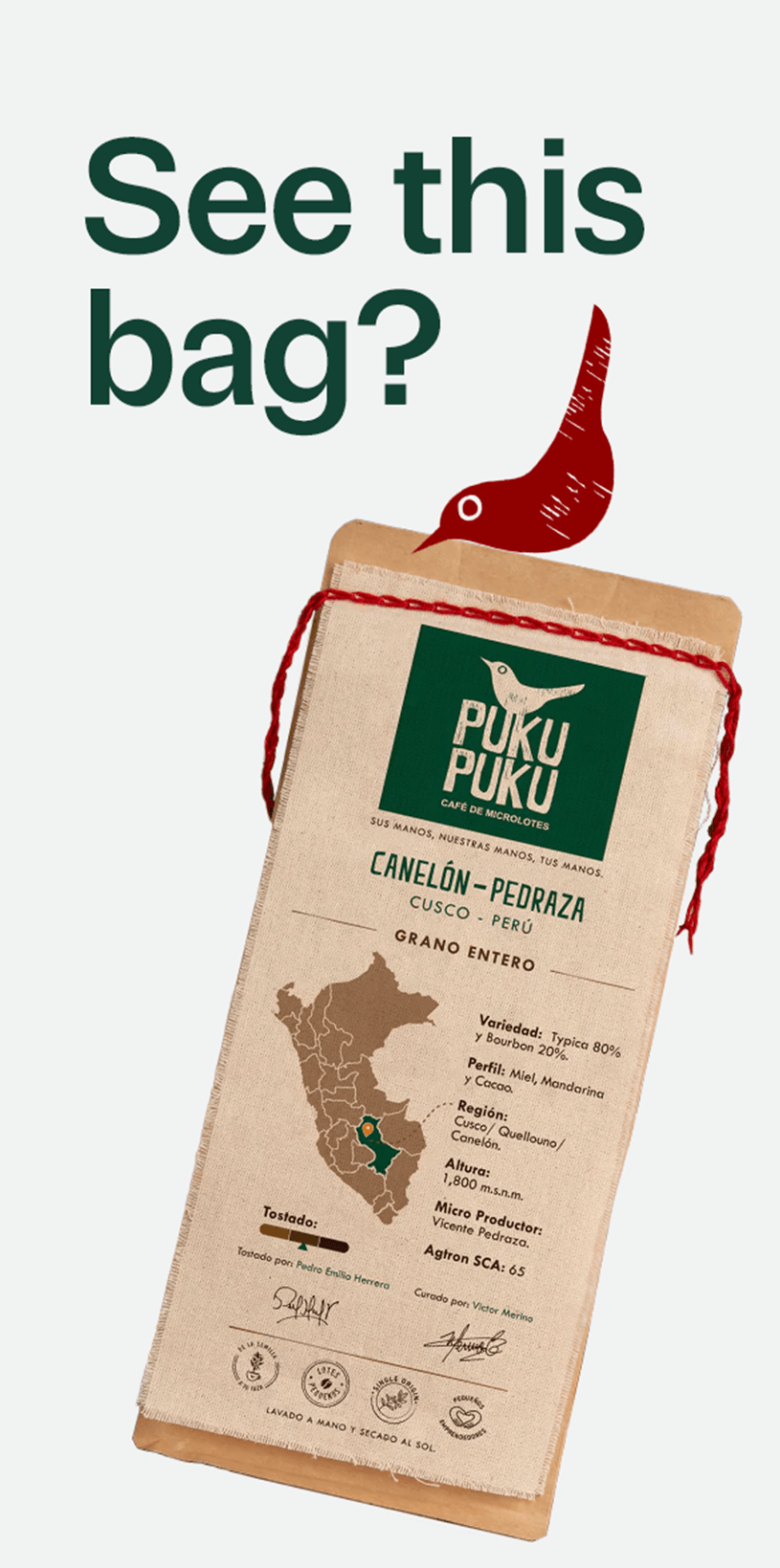
This bag.
On a grocery shelf, minding its own business.
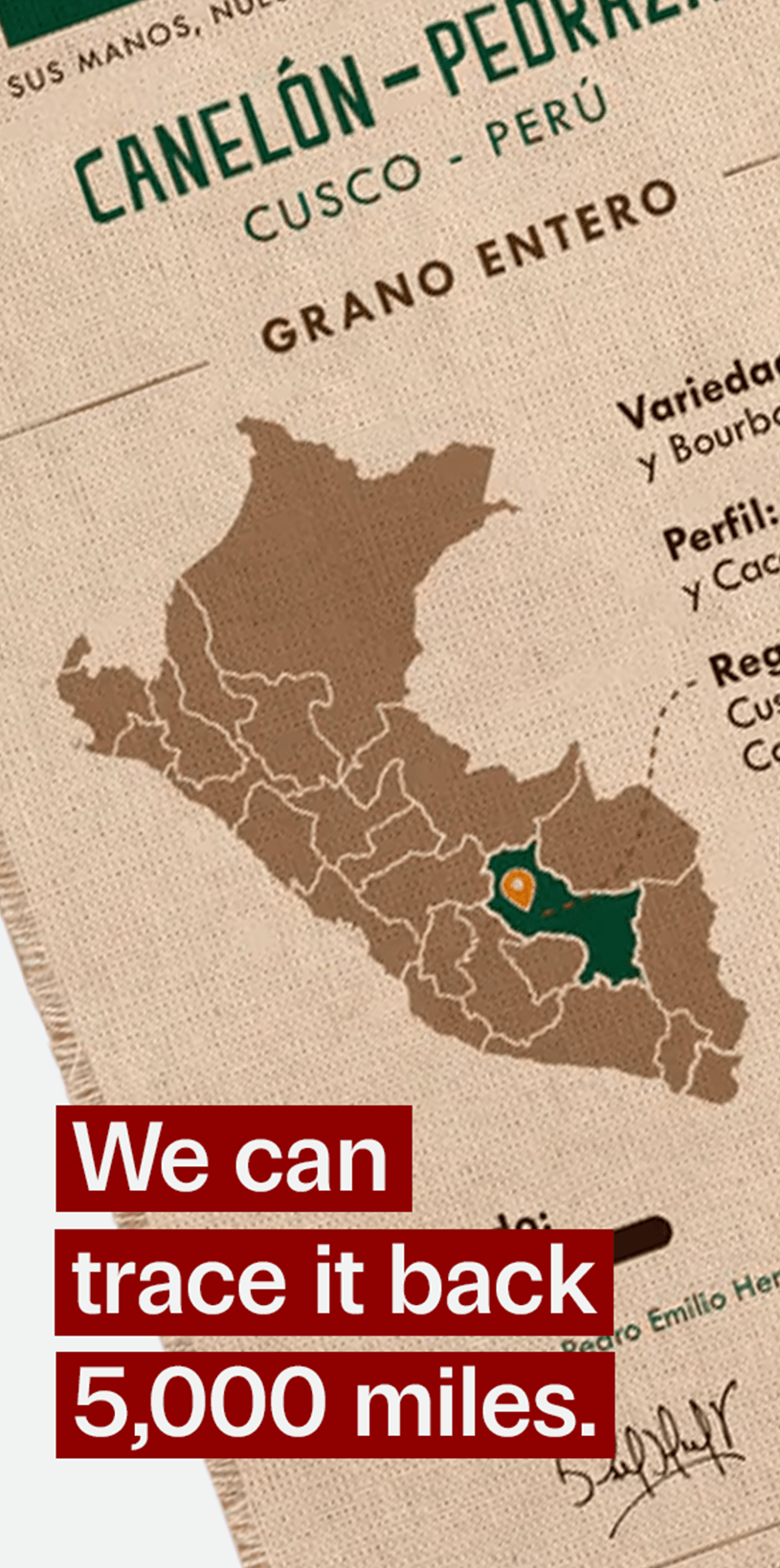
South America.
(Where most coffee labels give up.)
Peru.
Getting warmer.
Cusco.
The region.
Quellouno, Canelón.
Then a district. Then a smaller one.
1,800 metres up.
One plot, on one hillside.
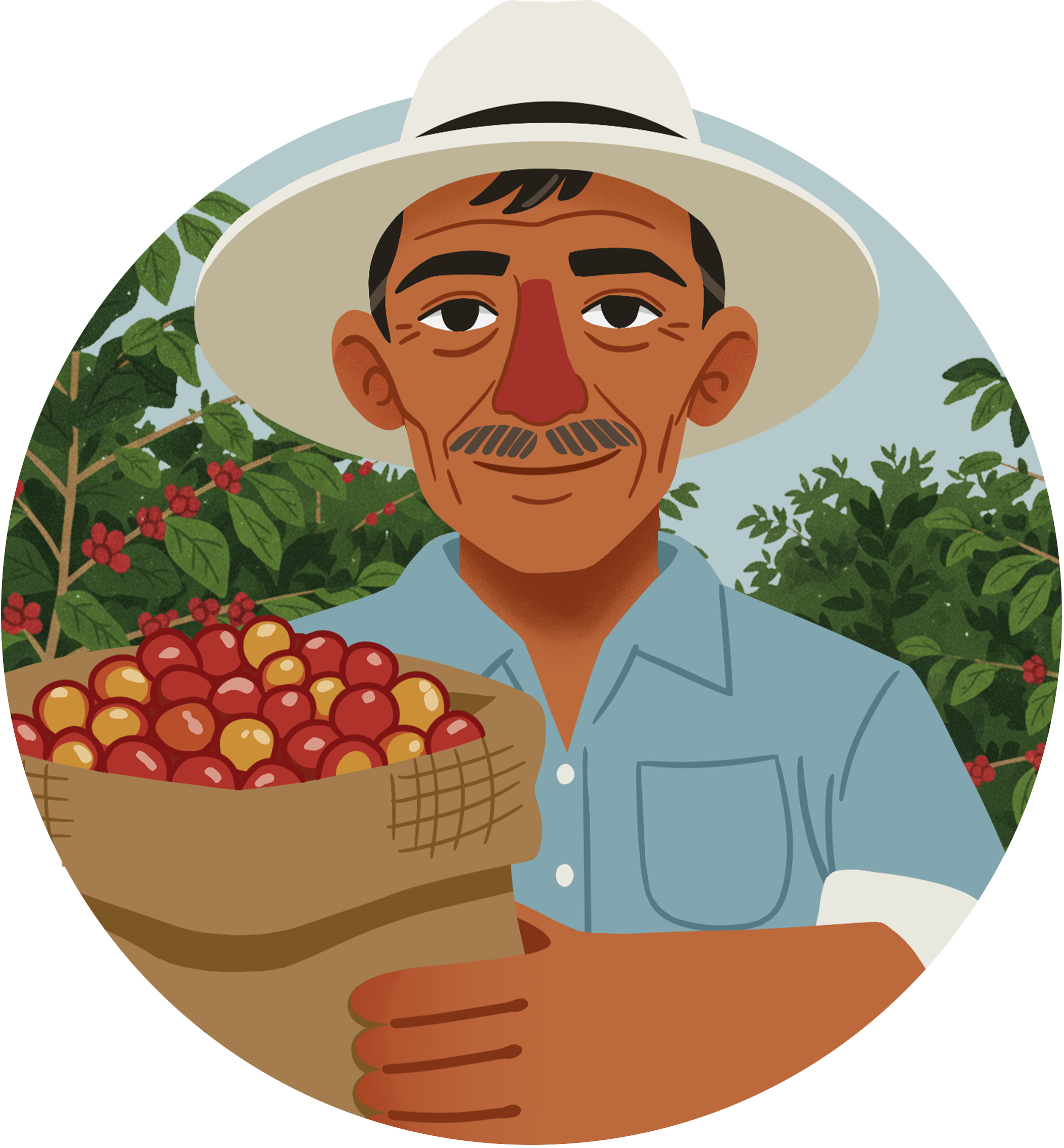
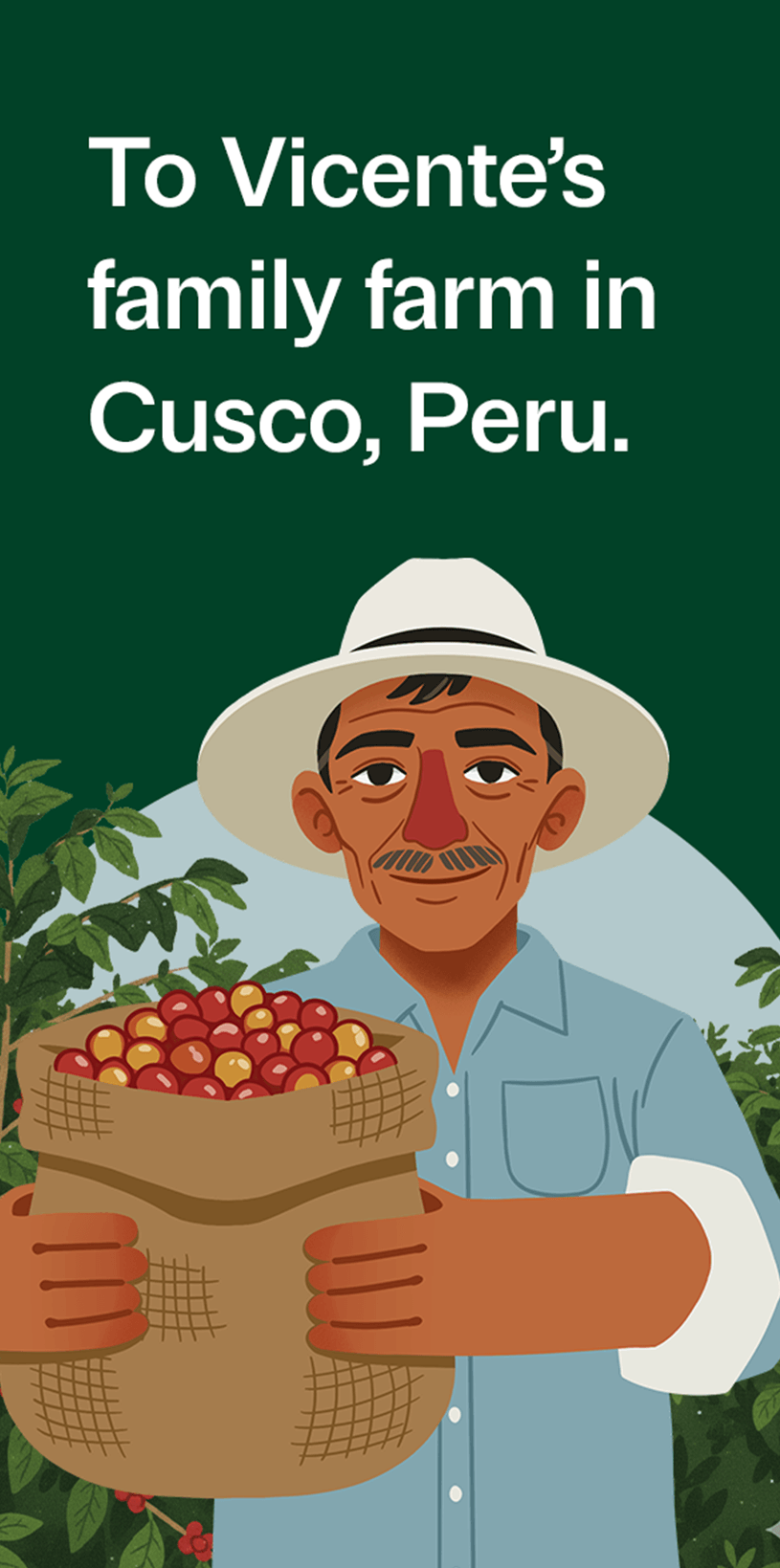
Vicente Pedraza.
The man who grew it. 5,000 miles, zero mystery.
The answer
Fifteen seconds that walk you from the bag in your hand to the person who grew what’s inside it. No adjectives until the very last frame, and by then they’ve earned it.
Vicente is a custom illustration, so the hero of the ad is a person, not a product shot. The real crew shows up at the end, to prove he’s not the only one.
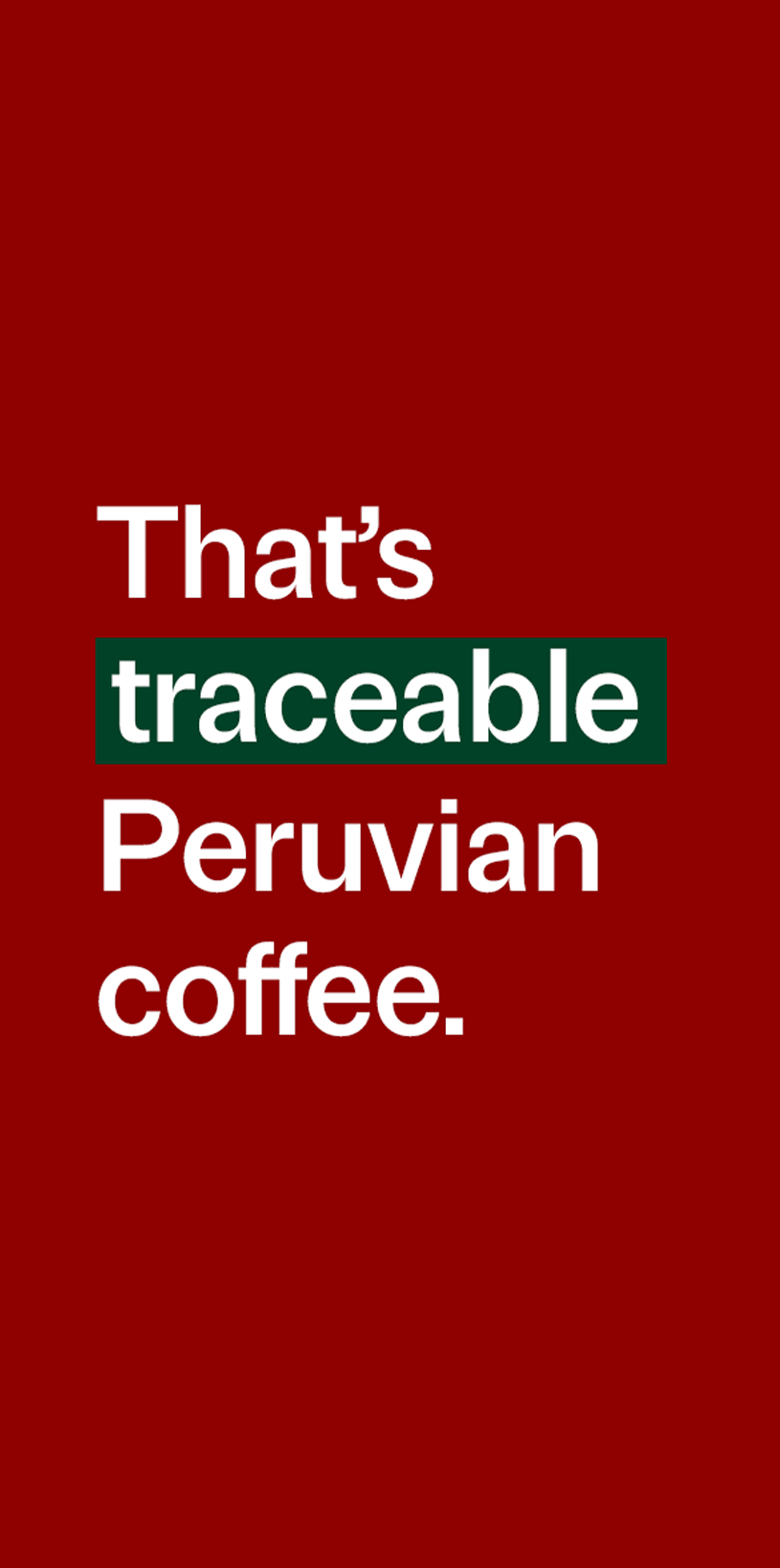

In the wild
Leaderboard, billboard, half page, inline rectangle. Each one tells the whole story, whether it gets 90 pixels of height or 600.
Here they are where they’d actually live: next to the news.
Local
Area man has no idea where his coffee comes from
“Somewhere in the south,” he told reporters, between sips.
Offline
Right by the grocery store doors, where the bag actually lives, the question turns into an invitation:Ask us about this bag.
Same dashed line, same map, same Vicente. Now at a walking pace.
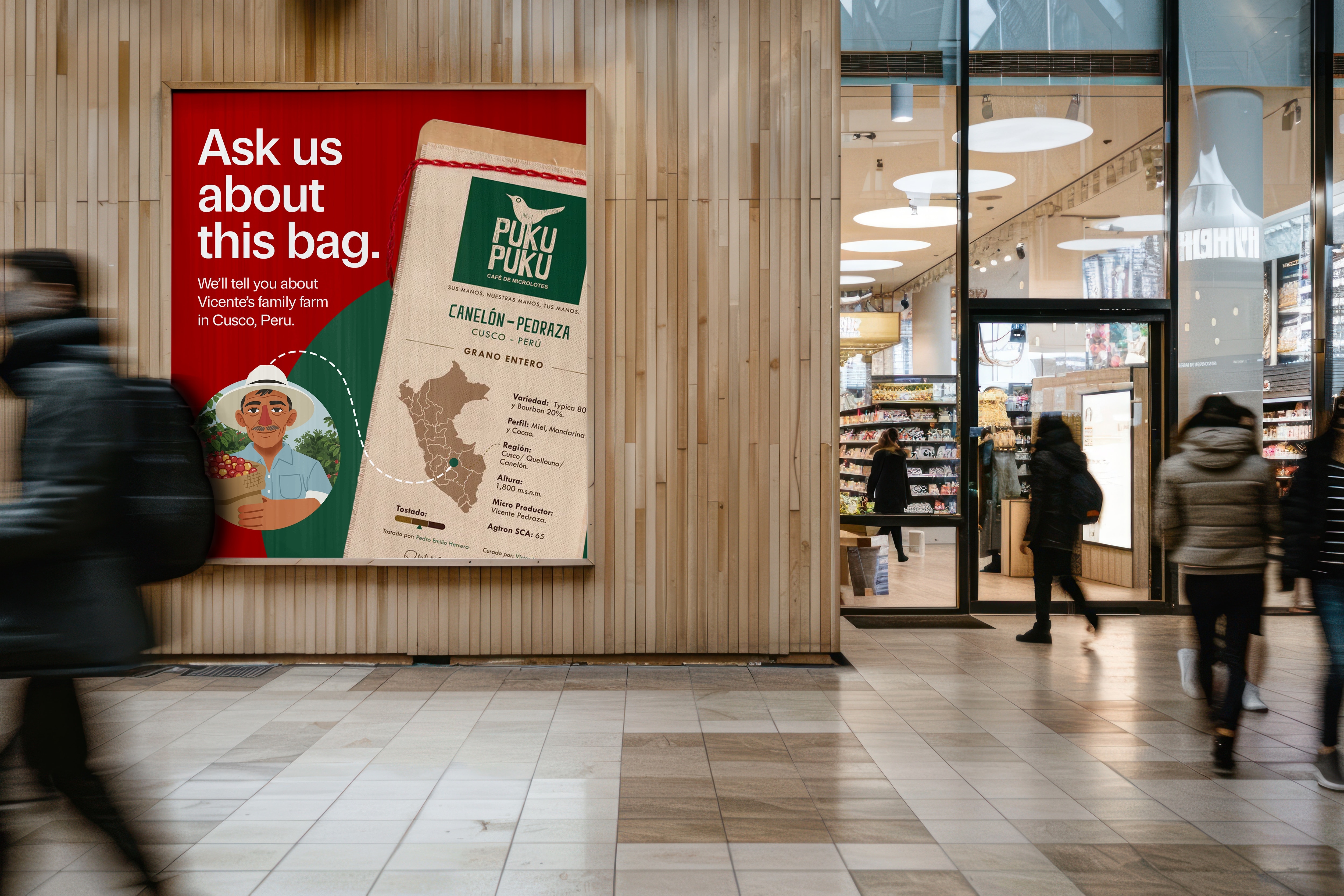
No rhetoric, no mountain silhouettes. Just the fact that this came from someone specific, and he has a name, a farm and a very good hat.
Spec work: Puku Puku didn’t ask. This idea is fully traceable, though.